


.png)
Review: What We Do When We Can’t Dance (Marylebone Theatre)
Review by Cat Wiltshire
⭐️⭐️⭐️
Growing up is rarely straightforward; between first love, complicated friendships, family expectations, and the desire for independence, the transition into adulthood can feel like navigating a minefield of decisions, each with consequences we can't possibly anticipate. DreamArts Rep Company’s What We Do When We Can’t Dance explores these familiar challenges through an ambitious combination of drama, original music, rap, movement, and film. After a National tour, the production returned to London’s Marylebone Theatre on Sunday 11th October for its final performance, bringing together a company of young refugee artists to tell a story about love, loyalty, and finding your place in the world. With so many creative elements competing for attention, can this coming-of-age production find its rhythm?

At the centre of the story is James, played by Haydn, a teenager desperate to spread his wings and experience life in the big city. After finishing his exams, he decides to leave home and move to London with his older brother Jackie, played by Mojtaba, whose persuasive nature and questionable reliability suggest that the transition to adulthood might not be as straightforward as James imagined. However, his departure means leaving behind two important people: Stella, his next-door neighbour, with whom he has a blossoming relationship, and Moses, his childhood best friend. As James navigates his new independence, his relationships grow more complicated, culminating in a revelation on his 18th birthday that threatens everything he believes about the people he loves.
The narrative is familiar, drawing on the universal experiences of growing up, making mistakes, and discovering that the people closest to us are not always who we believe them to be. There is plenty of potential here, particularly in the relationship between James and Moses, where years of friendship create opportunities to explore jealousy, loyalty, and betrayal. However, the writing sometimes struggles to develop these themes with the depth they deserve. Some emotional developments feel rushed, and the production's drive to incorporate numerous theatrical techniques sometimes comes at the expense of giving its characters and relationships room to breathe.

What makes What We Do When We Can’t Dance so interesting is the story behind its creation. DreamArts is a London-based charity that combines artistic expression with therapeutic support, giving young people opportunities to build confidence, creativity, and a sense of belonging. Its Rep company brings together young performers from refugee backgrounds, who collectively devise the stories, characters, music and movement for their productions. Rather than simply presenting an established script, these artists actively shape the material, giving them ownership over the stories they tell. The company tours theatres across the UK and delivers workshops to local communities, helping to create connections between young refugees and the wider arts sector.
This collaborative approach gives the production a distinctive identity. An unmistakable youthful energy runs through the whole piece, and the company's willingness to experiment with different storytelling techniques is admirable. Rather than relying solely on conventional dialogue, the performers incorporate rap, physical movement and filmed sequences to communicate the characters' thoughts and experiences. This multimedia approach creates an exciting theatrical language, particularly when music and movement work together to capture the restlessness and emotional intensity of adolescence.

Rhythmic lyricism provides a contemporary soundtrack for James' journey, offering an alternative way of expressing emotions that might otherwise seem overly sentimental for the teenage cast. They bring a welcome burst of energy, and these moments also demonstrate the creative potential of the young cast whose enthusiasm for the material is obvious.
The young ensemble brings a sense of authenticity to the stage; a natural camaraderie between the performers helps establish the friendships at the centre of the narrative. The lighter moments provide some welcome humour, ensuring that the production never becomes weighed down by its more serious themes. The cast demonstrates considerable potential; however, some of the more emotionally demanding scenes would benefit from greater subtlety and restraint. The strongest performances come when the actors appear most relaxed, allowing their interactions to develop naturally rather than placing too much emphasis on communicating the emotional significance of a particular moment.
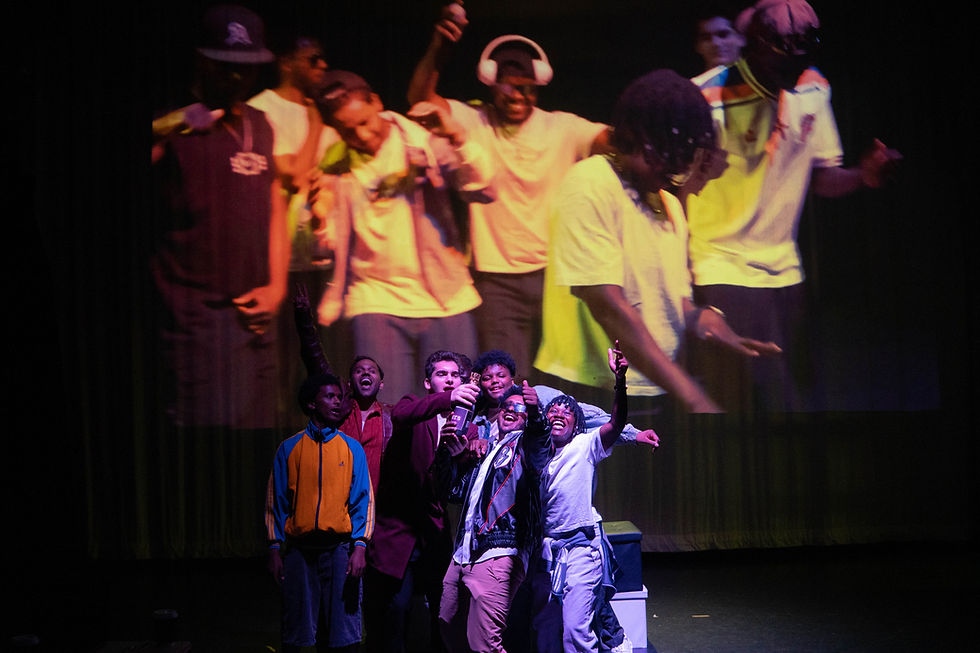
The stage is minimalistic, with several boxes moved around to create structures like sofas, desks, or even toilet cubicles. Visually, the production makes effective use of its multimedia format; the incorporation of film offers opportunities to expand the story beyond the stage's physical limitations, while lighting and sound help distinguish between different moods and locations.
Perhaps the most compelling aspect of What We Do When We Can’t Dance is the underlying message about identity and belonging. Although the performers come from refugee backgrounds, the company has chosen to explore themes recognisable to young people regardless of their circumstances. James' desire for independence, his uncertainty about relationships, and his struggle to reconcile ambition with loyalty are experiences that transcend cultural and geographical boundaries.

Overall, What We Do When We Can’t Dance is an imaginative and energetic production with plenty of heart, even if its execution doesn't always match its ambition. Nevertheless, there is considerable promise in both the production itself and the talented young artists bringing it to life. It may not always find its feet, but when What We Do When We Can’t Dance discovers its rhythm, there are glimpses of something genuinely special.
What We Do When We Can’t Dance played at Marylebone Theatre for one show only on 11th October.