


Review: The Tempest (Sam Wanamaker Playhouse)

Review by Matthew Plampton
⭐️⭐️⭐️
Pairing one of Shakespeare’s most magical dramas with the work of experimental director, writer, and actor Tim Crouch sounds like a perfect match. Billed as a reimagining, the production promised an exploration of authorship, illusion, and the audience's responsibility to respond to drama in a way that can either normalise harm or mobilise care. It was an enthralling prospect to see whether this high-concept production would take The Tempest to a new level or get anchored down by its lofty ambitions and tricks.

Director Tim Crouch’s candlelit Tempest for the Sam Wanamaker Playhouse is a knowingly self-aware act of storytelling, sometimes to powerful effect and sometimes to fading returns. The premise is declared upfront: Prospero (Tim Crouch), Miranda (Sophie Steer), Ariel (Naomi Wirthner), and Caliban (Faizal Abdullah) are four stranded narrators who repeatedly summon their own myth, conjuring shipwrecked courtiers, butlers, and jesters from thin air and audience aisles.
The Tempest strands a father and daughter on an island where old enemies wash up, spirits help or hinder, and a storm clears the way for reckonings and fresh starts. Crouch’s version retains the story's frame but asks the audience to explore the idea of storytelling and who owns it. That playful, self-aware idea provides for a meta-filled production: audience members are accused of filming, actors rise from seats, singers materialise in galleries, and a prop flotilla and spinning model ship stand in for the storm. This fun concept provides some comedic moments; however, they soon wear thin as the piece progresses, whilst also eclipsing the narrative itself. Maybe that was the intention, but you seldom settle into the plot, as the meta concept keeps you from ever fully engaging with the story and characters.
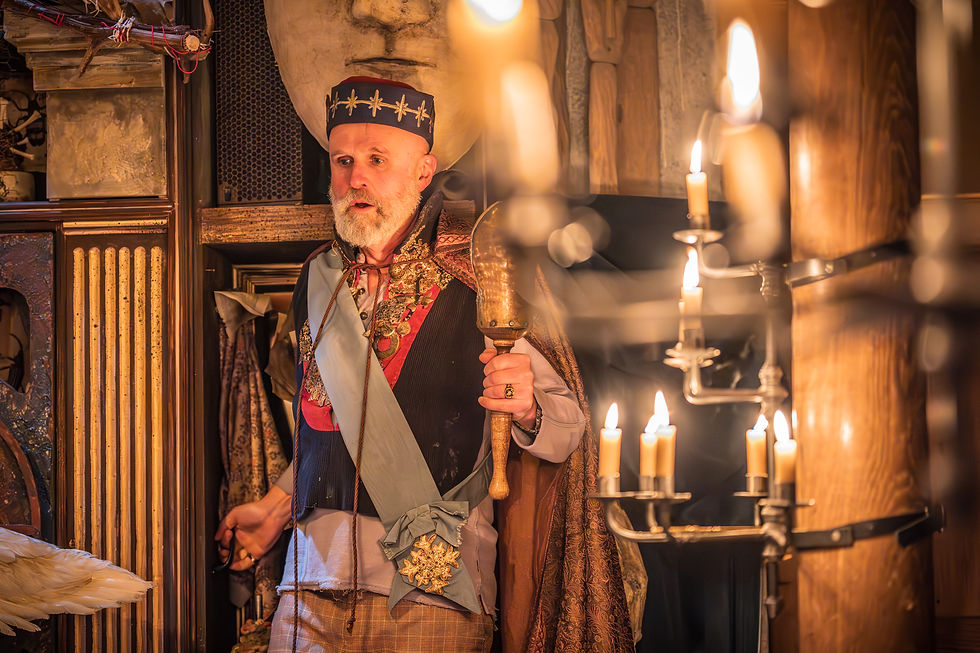
Crouch’s Prospero is no longer the powerful, magical figure we have come to know and is instead pushed to the sidelines as other characters take his lines. Rather than fuelling a sense of control, Prospero reads as muted, with the enchantment drained, and you are left wondering how he ever seized control. Similarly, unconventional performances are given by Wirthner, as her Ariel is one of calm stillness with no sprite; Steer’s Miranda is naive, and swings from exuberant to grumpy; and Abdullah’s Caliban is a far cry from a controlled monster as he defies Prospero at every turn by often speaking in another language. Mercè Ribot and Patricia Rodriguez reinvent Trinculo and Stephano as feckless language-school students whose multilingual tirades all but steal the evening, with Caliban picking up their Spanish, exasperating Prospero.
The shipwrecked courtiers are drafted from the audience for their scenes and return to watch the play. They similarly go on to eat interval ice cream as Ariel scorns them. These concepts are potent at first and bring the piece alive, but they quickly tire and weigh down the piece as they are leaned on once too often. They bring more humour through the unconventional nature of the tricks, rather than really adding to the underlying message this production wants to convey. Antonia (Amanda Hadingue), portrayed as a highly strung, diet-obsessed ‘Karen’, leaves mid-scene shouting, “I know this story, and I don’t recognise it at all." This added line felt very needed to catch all the naysayers (me included) thinking about where the magic of the original Tempest had gone, which did bring about a knowing laugh from the audience.
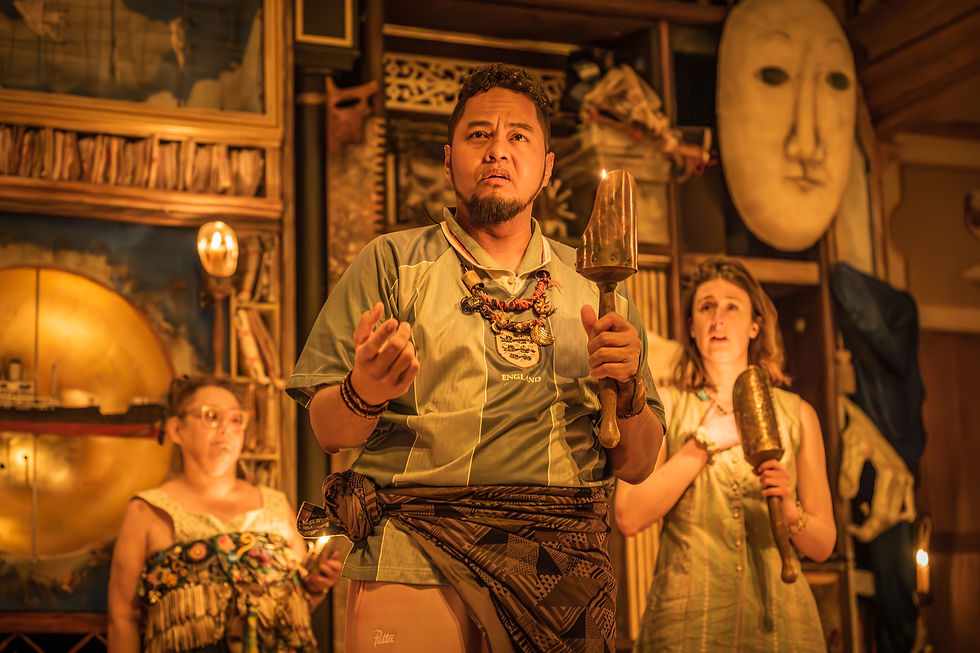
Rachana Jadhav’s set design must be applauded, as it frames the story with its eclectic museum feel. The bohemian cabinet of artefacts sets the perfect place for this magical tale, with a central spinning boat to symbolise the tempest, all bathed in Anna Watson’s beautiful candlelight design.
The production’s first half can feel like a workshop at times, with the actors in a circle, lines shared or stumbled, and audience boundaries dissolved; consequently, you're left asking where the magic is, as it all felt far too stagnant and muted at times. The second half regains some enchantment, letting lighting, stage design, and music carry more of the spellcasting, yet it never quite catches light in bringing the mystique or the message it wants to convey.

At times when Crouch’s mischief breaks into the theatre, the audience comes alive; nevertheless, for someone coming to see The Tempest for the first time, you would feel very much adrift in the meta-mist. For those daring to ride the self-aware wave, there is fun in the prickly intelligence; for others, the sea change will leave you frustrated and marooned.
The Tempest plays at the Sam Wanamaker Playhouse until 12th April. Tickets from https://allthatdazzles.londontheatredirect.com/play/the-tempest-london-tickets
Photos by Marc Brenner