


Review: It Walks Around The House At Night (Southwark Playhouse)
- Lily - Admin

- Mar 10
- 5 min read
Updated: Mar 20
Review by Matthew Plampton
⭐️⭐️⭐️
Theatre, with its intimate setting and ability to stimulate your imagination, creates the perfect environment for the horror and psychological thriller genre. Too often the success of this genre is based purely on jumpscare count, but this medium is at its most effective when the supernatural serves as a metaphor for deeper societal issues. Notable horror productions have utilised the genre and become household names, spawning West End hits and UK tours, whilst others have been horrifying for all the wrong reasons. It Walks Around The House At Night is the latest production to bring this genre to the stage, but did it deliver a night of thrills?

Fresh off a sold-out UK tour, theatre company ThickSkin present a ghost story that blends psychological thriller, dark comedy and social commentary into a tightly packed 90 minutes. Written by Tim Foley and directed by Neil Bettles, the production follows Joe, an out-of-work actor who accepts a suspiciously well-paid job playing a ghost at a remote countryside manor, only to discover that something far more sinister lurks in the shadows.
Where Foley's script draws you in is in its use of the horror genre as a vehicle for something deeper. There are genuinely insightful metaphors at play here, about chasing a dangerous, intoxicating kind of love rather than a safe one, and the seductive pull of mystery and wealth over stability and sincerity. The play also weaves in elements of class and anti-capitalist sentiment, interrogating the power dynamics between Joe, a working-class actor scraping by on bar shifts, and the rich, handsome stranger who lures him into this world. These themes are provocative and timely, and Foley handles them with expertise.

However, where the script soars thematically, it stumbles in focus; there are almost too many themes jostling for space within this stuffed runtime. As the play progresses, you find yourself uncertain of what exactly you should be afraid of. Is it the ghost? The demon? The mysterious handsome man who has brought Joe to the manor? Or is it capitalism itself? When the source of fear becomes this diffuse, the horror loses its potency; you cannot commit fully to being scared when you are unsure where to direct that fear. The ending and resolution compound this issue, feeling rushed and somewhat confused. I found myself leaving the theatre not fully understanding what had happened in the final moments, which is a frustrating place to be after such a compelling build.
The comedy, it must be said, is frequently excellent. Foley writes with a sharp, knowing wit, and the humour juxtaposes beautifully against the thriller backdrop, creating a tonal contrast that, at its best, feels genuinely thrilling. A particular highlight is a running joke that ‘no self-respecting gay man would ever use a main light’, which drew sustained, knowing laughter from the audience and speaks to Foley's gift for character-driven comedy. Yet there are moments where the humour detracts from the thriller's intensity, undermining sequences that should be all fear, all dread; it is a difficult balance to strike, and on occasion the scales tip too far towards the laughs.

The direction from Neil Bettles is well considered and demonstrates an understanding of both the comedic and horror elements at play, and his staging makes use of the intimate space to create a sense of unease. Yet one wonders whether a firmer directorial hand might have resolved some of the script's focus issues; the tonal shifts between comedy and horror don't always feel as controlled as they might, and the pacing in the final act loses its grip.
George Naylor is nothing short of excellent as Joe. He commands the stage from the very first moment, carrying the weight of this demanding one-man narrative with an ease that defies its complexity. Naylor brings a wonderfully witty flair to the comedy, delivering dialogue with impeccable timing and an infectious charisma that makes Joe endlessly endearing. Naylor skilfully reveals, layer by layer, that Joe's relentless humour is a carefully constructed facade, a shield against deep-rooted emotional avoidance and a paralysing fear of failure. Joe is a man consumed by the need to make it as an actor, and Naylor shows us with devastating subtlety how this obsession has corroded his relationships, damaged his romantic life and ultimately led him into a situation far more dangerous than any audition gone wrong. It is a performance of real depth and nuance; one that deserves enormous praise.
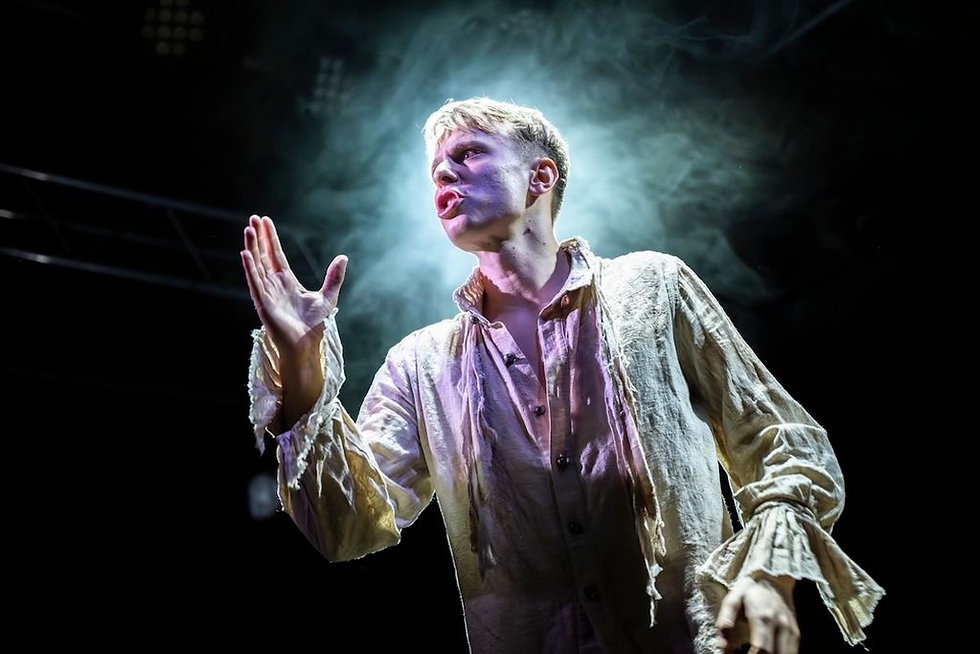
Oliver Baines, as The Dancer, offers a wordless counterpoint to Naylor's verbal dexterity. His contribution is affecting; a sequence that communicates how this horror has unfolded many times before, adding a layer of history and inevitability to the narrative. Baines moves with a physicality that serves the production well, though one wishes his presence had been woven more substantially into the fabric of the piece.
The technical design proves crucial in creating the production's atmosphere. A particular highlight is a sequence where Joe, in a moment of defiant self-distraction, puts Belinda Carlisle's Heaven Is A Place On Earth through his headphones while taking one of his ghostly walks through the manor grounds. The contrast of this euphoric pop classic against the tense, eerie horror soundscape of the woods is genuinely effective; a moment of theatrical ingenuity and absurdity that encapsulates what this production does well when it gets the balance right. It highlights the sound design from Pete Malkin, whose work builds tension throughout with skill and precision. The layered sounds create an immersive atmosphere of creeping dread, even if the production doesn't always capitalise on the unease it generates.

Joshua Pharo's lighting and video design assist in creating a sleek, modern aesthetic that serves the storytelling with clarity. The video work proves adept at establishing the eerie grandeur of the house, rendering the demon with precision, and navigating the timeline coherently. The lighting design possesses a cinematic quality, carving out shadows and sculpting the space with care. Pharo uses light to misdirect and conceal; moments of brightness serve to lull the audience before darkness descends. It is effective work, though in a production where the horror struggles to land consistently, even strong technical design can only do so much.
Therein lies the frustration of It Walks Around The House At Night; it is an excellently produced production with an incredible central performance from George Naylor, alongside some of the most impressive technical design work you will see outside the main West End shows. Yet it is held back by a plot that introduces too many competing themes, which dilutes the scares and prevents you from truly fearing one central antagonist. With a tighter focus, It Walks Around The House At Night could have been something terrifyingly terrific.
It Walks Around The House At Night plays at Southwark Playhouse until 28 March 2026. Tickets from https://southwarkplayhouse.co.uk/productions/it-walks-around-the-house-at-night/
Photos by Tommy Ga-Ken Wan