


Film Review: Billie Eilish - Hit Me Hard And Soft: The Tour Live in 3D

Review by Dan Ghigeanu
⭐️⭐️⭐️⭐️⭐️
When you think of artists who define a generation or changed the music industry, a select few names immediately come to mind, such as Michael Jackson, Prince, or Taylor Swift. Each of them left an undeniable mark on pop culture. Their influence on the industry is impossible to ignore. They each introduced something innovative, whether through performance style, artistic identity, or the way audiences experience live music. Concert films have long been an extension of that influence, with Taylor Swift’s The Eras Tour widely regarded as one of the most successful and culturally significant filmed concert experiences ever released.
In an era where audiences have seen countless live recordings, documentaries, and immersive cinematic events, it becomes increasingly difficult to create a concert film that genuinely feels original. That is precisely why Hit Me Hard And Soft Tour: Live in 3D arrived with such anticipation. I was looking forward to seeing it, not just as a fan of music but purely because this sort of tour film has never been done before. The project promised something entirely new for the concert film format, raising the question of whether it would further cement Billie Eilish as one of the defining artists of her generation or simply serve as another visually ambitious experiment. But will it make me think, man, she really is the greatest, or will I leave the cinema feeling like the bad guy?

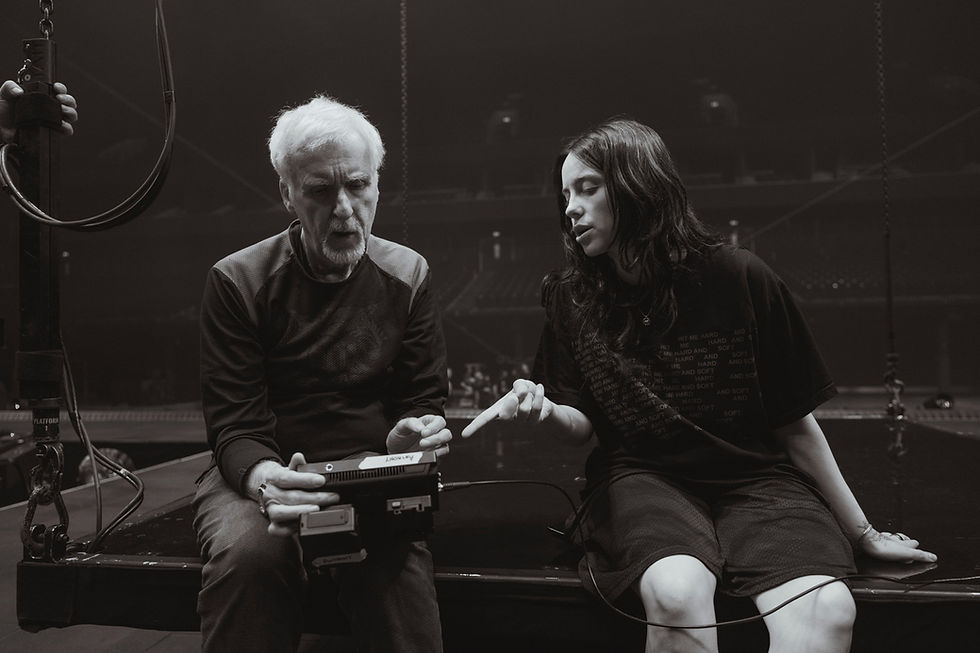
The Hit Me Hard And Soft Tour spanned more than 80 venues across Europe, Oceania, and North America, becoming one of the most talked-about concerts of 2025. The footage used for the film was captured during performances at Manchester’s Co-op Live in July 2025. What immediately elevates this project beyond a standard concert film is the collaboration behind the camera. The film is co-directed by Billie Eilish herself alongside Academy Award-winning filmmaker James Cameron, a director renowned not only for blockbuster projects but also for pioneering advancements in cinematic 3D technology through films such as Avatar and its sequels.
The partnership between Eilish and Cameron seems unexpected, yet it quickly becomes clear why it works so effectively. Cameron’s expertise in immersive filmmaking perfectly complements Eilish’s deeply atmospheric and emotionally intimate style of performance. Together, they have crafted a concert experience that feels less like watching a live show and more like living it. The film utilises cutting-edge virtual reality-inspired 3D technology to position viewers directly within the audience. At certain moments, the perspective shifts between standing among thousands of fans and sharing the stage alongside Billie herself. The result is an astonishing level of immersion rarely achieved in a filmed concert.
What makes this film special is that while the 3D presentation is undeniably impressive, the true heart of the film lies in its celebration of the connection between Billie Eilish and her audience. All throughout the relationship between them is shown as sincere, personal, and profoundly meaningful. The film repeatedly highlights the sense of community her concerts create, showing fans from different backgrounds finding comfort, freedom, and acceptance within the community she has created. Her ability to make listeners feel understood has been one of the defining aspects of her career, and the film captures that connection beautifully. My favourite moment comes when Billie explains that she understands her fans because she once was one of them. She reflects on wanting to become the type of artist she would have admired and connected with when she was younger. Many artists speak about appreciating their supporters, but Billie Eilish consistently comes across as someone who genuinely values the emotional relationship she has built with her audience.
Of course, the performances remain the centrepiece of the experience, and this is where the film truly excels. Without revealing too many surprises, the setlist offers a powerful showcase of Billie Eilish’s artistry and stage presence. What becomes immediately apparent is her extraordinary ability to command an arena with remarkably minimal staging. Unlike many contemporary stadium productions that rely heavily on elaborate choreography, oversized visual projections, and pyrotechnics, Billie’s performance style feels refreshingly restrained. Much of the show depends simply on her voice, her physical presence, and the chemistry she shares with her band and audience.

That simplicity becomes one of the production’s greatest strengths. Billie Eilish possesses a magnetic stage presence capable of holding thousands of people completely captivated. Whether delivering quieter emotional moments or more energetic performances, she maintains total control over the atmosphere within the arena. There is an intimacy to her performances that remains intact even within the scale of a massive arena setting. Few artists can create that balance as effectively as she does.
From a technical perspective, the direction deserves enormous praise. James Cameron’s influence is particularly evident in the film’s ambitious use of 3D cinematography. Unlike many previous attempts at immersive concert filmmaking, where 3D often feels like a distraction, here it serves a genuine artistic purpose. The camera movement and perspective create a sensation of physical presence that traditional concert films struggle to replicate. The transitions between these perspectives are fluid and carefully designed, preventing the immersive format from becoming overwhelming. Instead, the technology enhances the emotional intensity of the performances. You are actively experiencing the atmosphere alongside everyone else in the arena. It represents a significant evolution in how live music can be translated to cinema and may well influence the future of concert filmmaking in the years to come.

What is perhaps most impressive about the film is its confidence in allowing emotion and atmosphere to take centre stage over spectacle. Despite the groundbreaking technology, the experience never feels cold. This remains a deeply human film about music, connection, and shared experience. The immersive visuals exist to strengthen those themes rather than replace them. That balance is incredibly difficult to achieve, yet the film manages it remarkably well.
Ultimately, Hit Me Hard And Soft Tour: Live in 3D stands as one of the most innovative and emotionally engaging concert films ever produced. It succeeds not only because of its technical achievements but because it understands what makes live music meaningful in the first place. Billie Eilish and James Cameron have created something that feels genuinely fresh within a format that often struggles to reinvent itself. More importantly, the film further solidifies Billie Eilish’s place among the defining artists of her era. She has already proven herself as a groundbreaking musician and songwriter, but this project demonstrates her ambition as a creative visionary.
By the end of the film, one thing becomes extremely clear. This is not simply another concert film. It is an experience that redefines what a filmed live performance can look and feel like. For fans, it is a celebration of the connection they share with Billie Eilish; for cinema audiences, it is a glimpse into the future of immersive entertainment. And for the music industry as a whole, it may well represent the beginning of a new standard for concert filmmaking.
Hit Me Hard And Soft Tour: Live in 3D plays in cinemas from 8th May.